Printable Family Bonding Routine: At-Home & Outdoor Fun
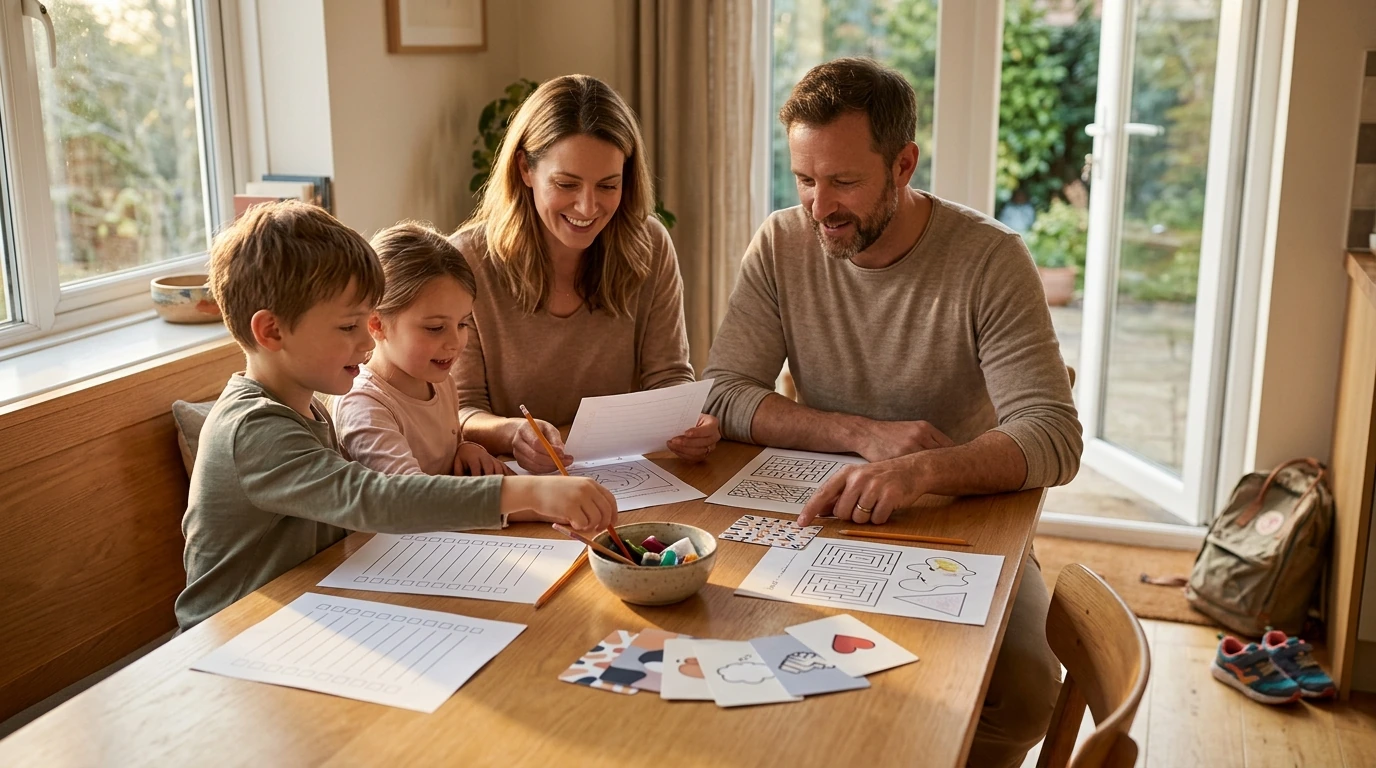
Stronger Together: A Simple Family Bonding Routine With Printable Activities
Busy schedules, screens, and changing routines can make it hard to find consistent, meaningful family time. The Stronger Together Family Bonding Pack is designed to make connection easier with a ready-to-use set of printable at-home and outdoor activities, plus a family time checklist and eBook to help turn “someday” into a simple weekly habit.
What the Stronger Together Family Bonding Pack Is
The Stronger Together: Family Bonding Pack is a digital family activities guide built for kids and parents to use together without complicated prep. It’s designed to reduce the “What should we do?” loop by providing printable activity pages that are quick to start, plus prompts that flex for different ages and family sizes.
Because family life doesn’t follow one schedule, the pack includes a mix of at-home and outdoor connection ideas to fit weather, energy levels, and time constraints. The family time checklist supports consistency (without pressure) and helps decision-making feel lighter—especially on weeknights, weekends, school breaks, or “reset” moments after a stressful week.
Who It Helps Most (and Why It Works)
This kind of structured-but-simple routine helps families who want more connection but feel stuck choosing activities or starting conversations. It also works well for parents looking for screen-light or screen-free options that still feel fun and modern—without requiring a big craft setup or a perfectly planned evening.
Caregivers often find that having prompts and clear choices turns quality time into something you can actually follow through on. Kids who do better with predictable routines benefit from knowing what happens next, and households blending ages (siblings, cousins, or mixed-grade kids) can use adjustable prompts so everyone can participate at their level.
That “back-and-forth” connection matters. Harvard’s Center on the Developing Child describes how responsive interactions (often called “serve and return”) support healthy development and relationships: https://developingchild.harvard.edu/science/key-concepts/serve-and-return/.
What’s Inside: Activity Types That Build Real Connection
Not every day calls for the same kind of family time. Some days you need calm conversation. Other days you need movement, laughter, and a shared goal that gets everyone on the same team. The activities in this pack are built around:
- Conversation starters that go beyond yes/no and help kids share feelings, ideas, and stories.
- Team challenges that encourage cooperation, turn-taking, and shared problem solving.
- Outdoor connection activities that combine movement with attention and curiosity.
- At-home activities that work in small spaces with common household items.
- Reflection prompts that help the family notice progress and celebrate small wins.
Quick activity map: choose what fits today
| Need right now | Best activity style | Typical time |
|---|---|---|
| Everyone is tired | Low-energy conversation prompts | 10–15 minutes |
| Kids have big energy | Outdoor scavenger-style connection activity | 20–40 minutes |
| Siblings are arguing | Team challenge with shared goal | 15–25 minutes |
| Parent is short on time | Printable quick-pick activity | 10–20 minutes |
| Family wants a weekly ritual | Checklist + rotating activity theme | 30–60 minutes |
A Simple Weekly Routine Using the Family Time Checklist
Consistency is easier when the plan is small, predictable, and forgiving. A simple rhythm can keep family time from becoming another “project” that fades out when things get busy.
- Pick two default days. Try one weekday plus one weekend day, so connection time is expected—not negotiated every week.
- Set a realistic minimum. Even 10–15 minutes counts. The goal is continuity, not perfection.
- Offer two choices. Let kids pick between two activities so they get autonomy without stalling the evening.
- Use a consistent opener. One short question or prompt helps everyone transition faster.
- End with a quick close. One gratitude, one highlight, or one “next time” plan gives the moment a clear finish.
- Make it visible. Keep printed pages in a fridge folder, binder, or activity box to remove friction.
If you want the routine to feel calmer (and safer emotionally), the CDC emphasizes the importance of safe, stable, nurturing relationships for children: https://www.cdc.gov/violenceprevention/aces/essentials.html.
At-Home Ideas That Don’t Feel Like “More Work”
At-home bonding works best when it slides into what you already do. Think “micro-activities” that fit between dinner and bedtime or a quick connection prompt during a routine moment.
Outdoor Connection Activities for Weekends and After School
Making It Stick: Tips for Different Ages and Family Setups
Helpful Add-On for Problem-Solving Moments
For families who want extra brain-based activities (especially for older kids), pair bonding time with a skill-building resource like the Critical Thinking & Problem Solving eBook. It can complement teamwork challenges by giving kids new ways to think through obstacles, choices, and real-life scenarios.
FAQ
Is the Stronger Together Family Bonding Pack printable and usable right away?
Yes. It’s a digital download designed for printing, so you can start quickly after purchase and print only the pages you want to use first (and reprint favorites as needed).
How much time do the activities take?
Most options fit a realistic range of about 10–60 minutes. The checklist supports short sessions on busy days so the habit stays consistent even when the week is full.
Will the activities work for different ages?
They’re built to be flexible, with prompts you can simplify for younger kids or extend for older kids and teens. Offering two activity choices also helps you match the moment while keeping everyone involved.












Leave a comment